

What are Data Models?
Data modeling is the process of creating visual representations of data that allow information to be structured in such a way that it can be easily analyzed and used. It covers the definition of entities, attributes and relationships between them, which contributes to greater transparency and efficiency of working with data.
Types of models are given
Our data modeling experts use three main types of models to better understand data structure and abstraction.
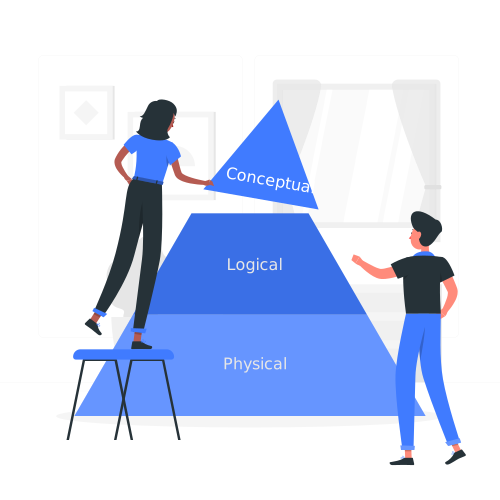
Conceptual model
Conceptual models begin with a general meaning that inspires the structuring of the data model. This stage includes defining the basic data structures and entities that will make up the basic elements. The focus of the conceptual data model is on the entities, their characteristics, and the relationships between them.
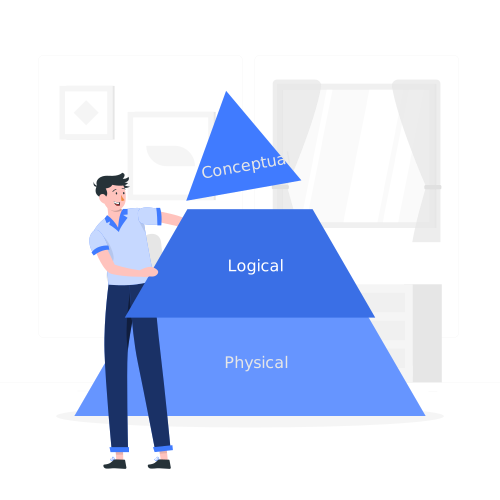
Logical model
The logical model represents the elements described in the conceptual model with greater technical detail. This includes defining data structures, data types, keys, and attributes. It is important to note that technical specifications for specific databases are not taken into account at this stage. A logical model is the basis for creating data structures in any database.
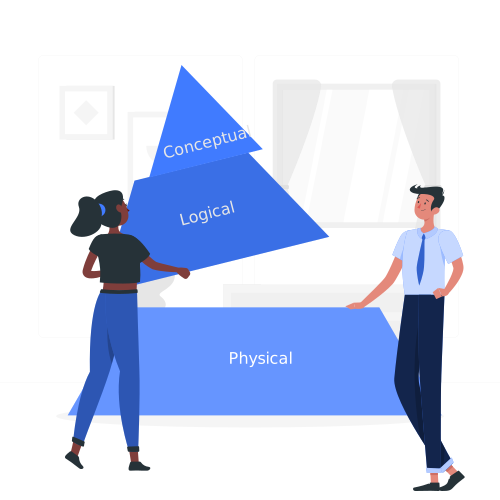
Physical model
The logical model is transformed into the physical model of the database. The physical model contains all the technical specifications needed to implement the database. This is a detailed plan that meets the requirements of a specific database product.
Problems solved by Data Models
Data models go beyond simply organizing data. They solve several strategically important tasks:
- Data organization: all data is organized into logical structures for easier access and management.
- Data integrity: rules and relationships to avoid duplicates and errors.
- Performance improvements: data structure optimization for faster execution of queries.
- Analytics support: the basis for more accurate and efficient data analysis.
- Minimizing redundancy: saving space and resources.
- Flexibility and scalability: easily scale and adapt to changes.
- Relationship Management: a clear picture of the relationships between data.
- Compliance with standards: compliance with all industry norms and requirements.
- Integration with other systems: easy connection to external data sources.
Data modeling Process
A clear process of developing data models, developed over the years, ensures the rapid implementation of simple and understandable data models, and includes the following stages:
Collection of business requirements
We analyze your needs and goals
- Step 01.
Conceptual model design
We define the main subjects and their connections
- Step 02.
Model normalization
We eliminate data redundancy and improve its integrity
- Step 03.
Logical model design
We analyze the detailed model, define attributes and connections
- Step 04.
Designing a physical model
We create the physical structure of databases
- Step 05.
Verification and testing
Checking the model for consistency and efficiency
- Step 06.
Realization
Finally, the database comes to life during the implementation phase
- Step 07.
Documentation
We are forming a comprehensive documentation document for further use and development
- Step 08.
Updates and support
As the business needs of your organization evolve, we update and scale the existing model
- Step 09.
Our data modeling services
As part of our data modeling services, we offer a comprehensive approach that includes all the necessary steps to ensure efficient and reliable work with data. Our experts work with you every step of the way to ensure your data is optimized and ready to use.
Data modeling
Our service includes three stages. Conceptual modeling defines the main entities and their relationships. Logical modeling adds attributes and specifies relationships. Physical data modeling transforms a logical model into a physical database structure.
Optimizing the data model
We analyze and optimize your data models to improve performance and reduce storage costs. Optimization includes reviewing data structures, indexes, and queries to ensure maximum performance.
Data migration
We provide safe and efficient data migration from one system to another. This includes planning, extracting, transforming and loading data, as well as verifying its integrity after migration.
Backup and restore
We design and implement backup and recovery strategies to ensure data security and availability. This includes creating backup plans, setting up automatic backups, and regularly testing data recovery.
Data model documentation
We create detailed documentation for each data model, including descriptions of entities, attributes, relationships, and business rules. This helps in ensuring that the model is understood and maintained in the future.
Data analytics
Our experts will help you gain valuable insights from your data. We offer analytical services including big data analysis, predictive analytics and data visualization to support decision making.
Stack of technologies
We use advanced technologies and tools to build data models that help create reliable and scalable solutions. We choose the most suitable technologies according to the needs of customers:




















For the implementation of unique flow and data processing tasks, also consider our services in:
Benefits of data modeling from FMP
Building data models is key to effectively managing and using information in your organization. By ordering our services, you get:
Clearly structured data
Organization of data into logical and convenient structures
Redundancy reduction
Saving resources and reducing storage costs
Scalability
Flexible models that can adapt to changes and expansions
Compliance with standards
Ensuring compliance with industry norms and standards
Improving team interaction
Improving communication between different departments and units
Ensuring integrity
Rules for storing and displaying data without errors
Optimization of the model
Quick access to data and increased system performance
Integration with other systems
Easy connection to external sources and systems
Development support
The basis for further development and improvement of information systems
Analytical capabilities
A base for deep analysis and making the right decisions
Best practices for building Data Models
To ensure the reliability and efficiency of data models, our FMP company follows best practices:
- Clarity and simplicity: Depending on your business, we create models that are clear to all participants in the process.
- Flexibility and scalability: We develop models that easily adapt to changes in your business requirements or new data.
- Data integrity: We ensure the reliability and consistency of your data.
- Focus on business goals: We guarantee that our models directly support the solution of your business tasks.
- Automation: We use the most modern tools to automate the creation and updating of data models.
- Involvement of stakeholders: We take into account the opinions and requirements of all involved parties when developing models.
- Data Assurance Study: We conduct a detailed analysis of data sources for your organization.
- Regular update of models: We ensure constant updating of your models in accordance with changes in business processes.
- Model documentation: We provide clear and understandable documentation for you.
Ready to improve your data management?
Order the Data Modeling service today and open up new opportunities for your business. Contact our experts and find out how we can help you create an efficient and reliable information system.
Leave a request
Use modern services, automate processes, analyze data and grow together with the FMP Company.

